|
|
|
We offer the following treatments and
surgeries: |
|
� |
Hernia
Repair |
|
� |
Removal of
gall bladder (Cholecystectomy) |
|
� |
Removal of
appendix (Appendectomy) |
|
� |
Prevention
of gastroesophageal reflux (GERD) |
|
� |
Removal of
spleen for blood related disorder (Splenectomy) |
|
� |
Surgery
for reducing excessive sweating of
palm and sole (Thoracoscopic
Sympathectomy) |
|
� |
Removal of
large intestine for cancer or other
diseases (Laparoscopic Colectomy) |
|
|
|
|
Inguinal Hernia Repair |
|
|
|
|
|
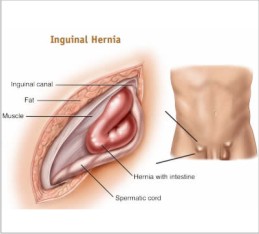
A Hernia is caused when the
supporting, internal tissues of an
organ start to bulge out of the
weakened abdominal wall where they are
normally contained. It is a small
balloon-like sac that occurs when the
inner lining of the abdominal muscle
pushes its way through the abdominal
wall due to an opening or weakness of
the wall. |
 |
|
|
Symptoms |
|
� |
Bulge in the groin area |
|
� |
Pain in the Groin |
|
|
|
|
|
Long term Risks |
|
� |
May become carcinogenic |
|
|
|
|
|
Solution |
|
� |
The laparoscopic procedure for
repairing hernia is the latest and
most advanced procedure for correcting
hernia |
|
� |
In this procedure, a laparoscope (a
flexible telescope connected to a
camera and other surgical instruments)
is inserted through incisions to allow
the surgeon to get a clear,
high-resolution image of the hernia
and its surrounding tissues |
|
� |
The hernia is repaired from behind the
abdominal wall (internal tissue which
helps to encapsulate the internal
abdominal organs) |
|
� |
A small piece of surgical mesh is
placed over the hernia and is secured
in position with small surgical
staples. This surgery is usually
performed with general or local
anesthesia |
|
|
|
|
|
<< Back to the
Top |
|
|
|
|
Surgical Gall bladder removal (Cholecystectomy) |
|
|
|
|
|
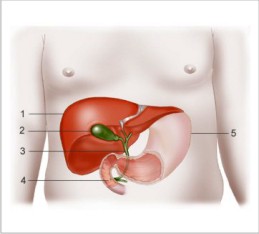
Cholecystectomy is the surgical
removal of gallbladder. It is carried
out in case of stones or blockages in
the gallbladder. It is also used in
the case of inflammation or infection
of the organ. The liver produces bile
to digest food. When we eat, bile is
added to the food as it passes into
the small intestine. This bile is
stored in the gallbladder. Bile breaks
the fatty material in food into tiny
fragments that help it to be more
easily absorbed by the intestine. Once
the gallbladder is |
 |
|
|
removed, bile flows out of the liver
through the hepatic ducts into the
common bile duct and directly into the
small intestine, instead of being
stored in the gallbladder. |
|
|
|
|
|
Symptoms |
|
� |
Acute pain in the stomach or right
abdomen area |
|
� |
Low fever |
|
� |
Nausea |
|
� |
Bloated feeling |
|
|
|
|
|
Solution |
|
� |
The gallbladder is removed using
laparoscopic procedure to reduce pain
and other complications |
|
|
|
|
|
Long-Term Complications |
|
|
Gallstones can block the normal flow
of bile if they move from the
gallbladder and lodge itself in any of
the ducts that carry bile from the
liver to the small intestine. The
ducts include the: |
|
� |
Hepatic ducts - which carry bile out
of the liver |
|
� |
Cystic duct - which takes bile to and
from the gallbladder |
|
� |
Common bile duct - which takes bile
from the cystic and hepatic ducts to
the small intestine |
|
|
|
|
|
<< Back to the
Top |
|
|
|
|
The Removal of the Appendix
(Appendectomy) |
|
|
|
|
|
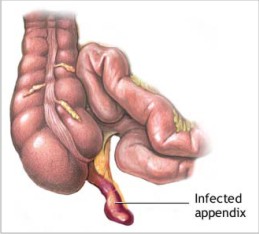
Appendicitis is an infection of the
appendix, due to which the Appendix
may need to be removed. As the
appendix is a vestigial (unnecessary)
organ, the removal causes no
difference to the internal working of
your abdominal organ systems. |
 |
|
|
Symptoms |
|
� |
Stomach
pain |
|
� |
Loss of
appetite |
|
� |
Low-grade
fever |
|
� |
Nausea |
|
� |
Diarrhea
or constipation |
|
|
|
|
|
Long-Term
Risks |
|
� |
Can cause
tissue death |
|
� |
The
appendix may rupture causing bacteria
to spread through the abdomen,
resulting in other infections |
|
� |
Decreased
blood supply to the appendix wall (the
tissue that encapsulates the appendix)
causing pain |
|
|
|
|
|
Solution |
|
� |
In a laparoscopic appendectomy, 1 to 3
incisions are made in the abdomen
region to insert a laparoscope and
other surgical instruments. The
surgeon operates with the aid of video
data and removes the appendix through
the incisions. This procedure involves
minimal tissue damage, fewer
post-operative infections, almost no
scarring and quick recovery. |
|
|
|
|
|
<< Back to the
Top |
|
|
|
|
GERD (Gastro-Esophageal Reflux
Disease) |
|
|
|
|
|
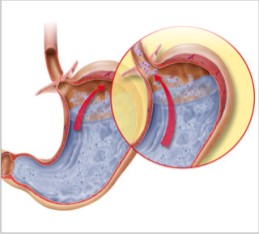
GERD is a chronic disease where the
acidic contents of the stomach get
refluxed into the lower esophagus,
thereby causing damage to it. |
 |
|
|
Symptoms |
|
� |
Heartburn |
|
� |
Abdominal
or chest pain |
|
� |
Belching
or bloating |
|
� |
Difficulty
in swallowing |
|
� |
Regurgitation |
|
� |
Nausea or
vomiting |
|
|
|
|
|
Causes |
|
� |
Caused by
damage or abnormalities in the barrier
between the esophagus and stomach |
|
� |
Abnormal
relaxation in the sphincter muscles
that help seal off the stomach |
|
� |
Impaired
expulsion of the acidic, semi-digested
content from the stomach or esophagus |
|
|
|
|
|
Long-Term Risks |
|
� |
Severe
intestinal damage |
|
� |
Severe,
chronic esophageal damage |
|
|
|
|
|
Solution |
|
� |
360�
Nissen fundoplication (NF) |
|
� |
Toupet
fundoplication (TF) |
|
|
|
|
|
Procedure |
|
� |
A few
incisions are made in the abdomen
area, through which tiny tube shaped
instruments are inserted. A
laparoscope which has a tiny video
camera and a powerful light source is
then inserted through this incision to
allow the doctor to view the procedure
on a monitor. Another incision is used
to insert surgical instruments in the
body by which the procedure is carried
out. It is performed under general
anesthesia. |
|
|
|
|
|
<< Back to the
Top |
|
|
|
|